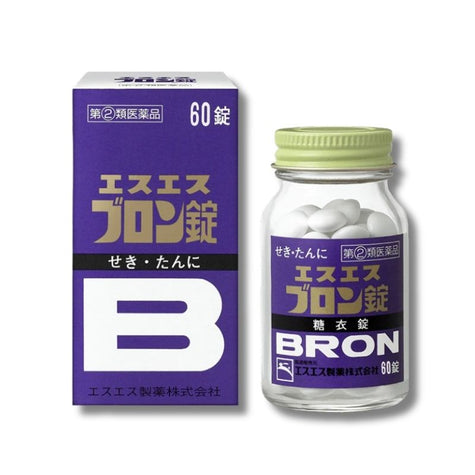
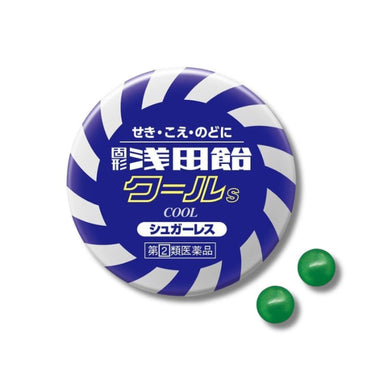
For cough, voice, and throat
Asada Candy
In the 20th year of the Meiji era, "Goyaku Sarashi Mizuame" marked the beginning of Asada Candy's history.

The commitment of Solid Asada Candy
Extracts of four medicinal herbs—Platycodon, Tokon, Ephedra, and Carrot—are effective for cough, voice, and throat. Solid Asada Candy with herbal prescription (Designated Class 2 OTC drug).
Gently effective for cough, voice, and throat. The medicinal herbs that are the "heart" of Asada Candy.
The medicinal herbs used in Asada Candy are carefully selected by origin and cultivation period, and all extractions are performed in-house at our factory, ensuring thorough quality control before delivering the products to everyone.

|
Platycodon
A perennial plant of the Campanulaceae family widely cultivated as an ornamental plant in Japan and China, producing beautiful purple or white bell-shaped flowers from summer to autumn. The medicinal part is the root, containing platycodin saponins, used in various Kampo formulations. It helps to loosen phlegm, suppress cough, and reduce throat inflammation.
|
 |
Tokon
A herbaceous small shrub of the Rubiaceae family mainly found in Brazil, South America, growing to about 30 to 60 cm tall with woody runners. The medicinal part is the bead-like root portion, containing alkaloids such as emetine, which promote airway mucus secretion and help loosen phlegm.
|
 |
Maou
An herbaceous evergreen shrub of the Ephedraceae family native to China and Inner Mongolia, it produces green stems resembling horsetail about 30 cm tall and bears small yellow flowers in early summer. The medicinal part is the aerial stem, containing alkaloids such as ephedrine with bronchodilator effects, which help to suppress cough.
|
 |
Carrot
It is a different species from the common edible carrot, also called Otane Ninjin or Korean ginseng, native to northeastern China and Korea, and is a perennial plant of the Araliaceae family cultivated in various regions. In spring, it sends up a single stem about 60 cm tall with 3 to 4 leaves arranged in a whorl, and in early summer it produces small white flowers. The medicinal part is the root excluding the fine roots or lightly blanched root, containing active ingredients such as saponins called ginsenosides, which have expectorant effects and have been used since ancient times in China, the Korean Peninsula, and Japan.
|
● Features
Asada Candy for cough, voice, and throat
Sugarless drops containing 4 types of herbal medicines
【Designated Class 2 OTC Drug】
●Efficacy/Effects
Cough, phlegm, hoarseness due to throat inflammation, rough throat, throat discomfort, throat pain, throat swelling
<Precautions related to Efficacy/Effects>
●Dosage and Administration
Take the following amount into the mouth and let it dissolve slowly without chewing.
[Age: Dose per time: Number of doses per day]
Adults (15 years and older): 2–3 tablets: 3 times a day
8 years and older but under 15 years: 2 tablets: 3 times a day
5 years and older but under 8 years: 1 tablet: 3 times a day
Under 5 years: Do not take
<Precautions related to Dosage and Administration>
●Strictly follow the prescribed dosage and administration.
●When giving to children, administer under the guidance and supervision of a guardian.
●Ingredients/Quantity
Per 9 tablets
Platycodon root extract 94.5 mg
Trichosanthes extract 40.5 mg
Ephedra extract 40.5 mg
Ginseng extract 67.5 mg
〔Additives〕
Reduced starch syrup, reduced maltose starch syrup, acesulfame potassium, sodium chloride, disodium succinate, gum arabic, carnauba wax, l-menthol, talc, bleached beeswax, silicone resin, sorbitan fatty acid ester, glycerin fatty acid ester, sodium cellulose glycolate, fragrance
<Precautions related to Ingredients/Quantity>
●Dosage Form
Drops (external use [oral preparation] - tablets)
●Precautions for Use
■Do not do (Contraindications)
[If not followed, current symptoms may worsen or side effects may occur more easily.]
Do not use any of the following medicines while taking this product:
Other cough expectorants, cold medicines, sedatives
■Consult
1. The following people should consult a doctor, pharmacist, or registered seller before taking:
(1) Those receiving medical treatment from a doctor
(2) Pregnant women or those who may be pregnant
(3) Elderly people
(4) Those who have had allergic reactions to medicines
(5) Those with high fever or severe cough
(6) Those diagnosed with heart disease, high blood pressure, diabetes, or thyroid dysfunction
2. If any of the following symptoms appear after taking, they may be side effects; stop taking immediately and consult a doctor, pharmacist, or registered seller with this leaflet.
[Affected area: Symptoms]
Skin: rash, redness, itching
Digestive system: nausea, vomiting, loss of appetite
Nervous system: dizziness
3. If symptoms do not improve after 5 to 6 doses, stop taking and consult a doctor, pharmacist, or registered seller with this leaflet.
●Precautions for Storage and Handling
(1) Avoid giving to infants under 5 years old as there is a risk of choking.
(2) Store tightly closed in a cool, dry place away from direct sunlight.
(3) Keep out of reach of children.
(4) Do not transfer to another container (may cause misuse or quality changes).
(5) Do not use products past the expiration date. Even within the expiration date, consume as soon as possible after opening.