






























SGF Strengthened Spirulina 100%
 SGF Strengthened Spirulina 100%
¥3,360 JPY
/
SGF Strengthened Spirulina 100%
¥3,360 JPY
/

products.product.pickup_availability.unavailable
What is Spirulina?
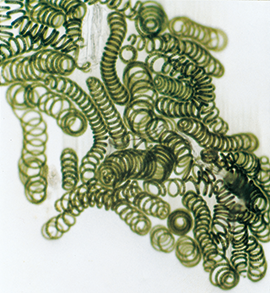
A type of cyanobacteria that appeared over 3 billion years ago. It grows naturally in subtropical regions of Africa and Central and South America and has a spiral shape.
Nutritional value
Rich in various nutrients such as protein, vitamins, and minerals, it is ideal as a nutritional supplement for modern people.
It has also been developed as space food by NASA.
While synthetic supplements contain only a few main ingredients,
100% Spirulina is packed with nutrients

A Spirulina product containing more of Spirulina's vitality
S.G.F. stands for Spirulina Growth Factor, a component packed with Spirulina's vitality. S.G.F. contains vitamins (mainly B vitamins), minerals, 18 types of amino acids, carbohydrates, and nucleic acids.
SGF-enhanced Spirulina is made by our unique manufacturing technology, extracting, drying, and powdering SGF from Spirulina, then mixing 5% into normally cultured Spirulina. This product contains more of Spirulina's vitality.
Spirulina contains all five major nutrients!
In addition to protein, carbohydrates, fatty acids, and vitamins, it is also rich in minerals like calcium, magnesium, iron, and zinc, which tend to be lacking in daily diets. In other words, it contains all five major nutrients. Moreover, its good digestibility allows these nutrients to be smoothly absorbed by the body.
Packed with high-quality protein!
Our body's parts are made of protein. Spirulina contains three times the protein of beef and twice that of soybeans.
Protein content of Spirulina
| Spirulina | Soybeans | Beef | Eggs | Fish | |
|---|---|---|---|---|---|
| Protein | 65–70% | 35.3% | 19.7% | 12.3% | 24.5% |
Calculated from the 5th revised food composition table
*Values may slightly differ from your reference materials. (The values on this website are calculated from the 5th revised edition of the food composition table and are newer than your reference materials.)
Moreover, Spirulina's protein is high-quality, containing a well-balanced amount of essential amino acids. This quality meets the ideal standards set by the FAO (Food and Agriculture Organization of the United Nations).
Contains 18 types of amino acids!
The key to life! "Protein (amino acids)" that make up the body
Protein is an essential nutrient used as raw material to make our body's cells, enzymes, and hormones. Spirulina contains about 70% protein (amino acids), which is very high quality. It includes 18 types of amino acids, both essential and non-essential.
Amino acids
Isoleucine, leucine, lysine, methionine, cystine, tyrosine, phenylalanine, threonine, tryptophan, valine, histidine, arginine, alanine, aspartic acid, glutamic acid, glycine, proline, serine
Minerals
Calcium, iron, magnesium, potassium, sodium, phosphorus, copper, manganese, zinc, cobalt, sulfur, chromium
Vitamins
β-Carotene (provitamin A), vitamin B1, vitamin B2, vitamin B6, vitamin E, vitamin K, niacin, pantothenic acid, biotin, folic acid
Other health components
Dietary fiber, polysaccharides, linoleic acid, γ-linolenic acid, inositol, SOD, phycocyanin, zeaxanthin, chlorophyll a, nucleic acids, and more

Essential amino acid composition (content in food)
| Spirulina | Chlorella | Soybeans | Beef | Eggs | Fish | FAO standards | |
|---|---|---|---|---|---|---|---|
| Isoleucine | 3.25–3.9% | 5.5% | 1.80% | 0.93% | 0.67% | 0.83% | 4.2% |
| Leucine | 5.9–6.5% | 7.7% | 2.70% | 1.70% | 1.08% | 1.28% | 4.8% |
| Lysine | 2.6–3.3% | 5.7% | 2.58% | 1.76% | 0.89% | 1.95% | 4.2% |
| Methionine | 1.3–2.0% | 1.5% | 0.43% | 0.43% | 0.43% | 0.58% | 12.2% |
| Cystine | 0.5–0.7% | 0.4% | 0.48% | 0.23% | 0.35% | 0.38% | 4.2% |
| Phenylalanine | 2.6–3.3% | 4.1% | 1.98% | 0.86% | 0.65% | 0.61% | 2.8% |
| Tyrosine | 2.6–3.3% | 1.5% | 1.38% | 0.68% | 0.49% | 0.61% | - |
| Threonine | 3.0–3.6% | 4.3% | 1.62% | 0.86% | 0.59% | 0.99% | 2.8% |
| Tryptophan | 1.0–1.6% | 1.1% | 0.55% | 0.25% | 0.20% | 0.30% | 1.4% |
| Valine | 4.0–4.6% | 4.9% | 1.86% | 1.05% | 0.83% | 1.02% | 4.2% |
Rich in plant pigments like chlorophyll and carotenoids
The body's lubricant! Supports circulation
Spirulina is rich in natural pigments such as green chlorophyll, blue phycocyanin, and orange to yellow carotenoids. Chlorophyll helps support the body's circulation and is also noted for care after fatigue or drinking the day before.
Spirulina contains carotenoids such as beta-carotene and zeaxanthin, natural pigments that play a very important role in improving a diet prone to oxidation.
Vitamin B, which tends to be deficient
Active in many situations! Popular nutrients
While vitamins are thought to be found in vegetables, vitamin B12 is rarely found in vegetables and is abundant in animal products. Spirulina contains more vitamin B12 than liver or oysters.
Support health with beta-carotene
Review a diet prone to oxidation!
The recommended daily intake of carotene is 5–15mg per person, equivalent to 200g of green and yellow vegetables plus 100g of light-colored vegetables, totaling 300g!
Beta-carotene converts only the necessary amount to vitamin A in the body.
If vitamin A is deficient, daily health problems are more likely, so use Spirulina, which is rich in beta-carotene that gradually converts to the necessary amount of vitamin A in the body, to improve a diet prone to oxidation.
Control excess fat too
Linoleic acid to review modern diets
Excess fat accumulating in the body, recently featured on TV. Spirulina is rich in linoleic acid and linolenic acid, which help clean up troublesome substances that cause poor circulation and harm the body.
Especially these two components cannot be produced in the body and must be supplemented regularly.
This much is contained in 40 Spirulina tablets (one day’s supply).

Spirulina covers this many nutrients at once, making it a perfect health multi-supplement for busy modern people.
Spirulina is an alkaline food
Alkaline food Spirulina is a strong ally for those who consume many processed or high-fat foods!
To stay healthy every day, it is necessary to eat a balanced mix of alkaline and acidic foods, but modern busy lifestyles tend to lean toward acidic foods. Spirulina supports the diet of such people.

*This table does not represent the pH of the food itself but shows the acidity or alkalinity of the liquid obtained by dissolving the ash left after burning the food in water. (It indicates whether the minerals contained in the food are acidic or alkaline, not the food itself.)
■Standard components and content (per 100g)
| Calories | 260–390kcal |
|---|---|
| Protein | 51.7–80g |
| Fat | 6.7–8.3g |
| Carbohydrates | 3.3–5g |
| Dietary fiber | 6.7–10g |
| Sodium | 433.3–650mg |
| Calcium | 263.3–495mg |
| Iron | 61.7–115mg |
| Potassium | 1050–1800mg |
| Magnesium | 200–383.3mg |
| Zinc | 3.3–6.7mg |
| Copper | 0.3–0.8mg |
| Manganese | 1.5–8mg |
| Selenium | 5–10μg |
| Cobalt | 0–0ppm |
| Phosphorus | 550–1400mg |
| Total chromium | 0.5–3.3ppm |
| Iodine | 0–1.7mg |
| β-Carotene | 80000–200000μg |
| Vitamin B1 | 2.2–4.8mg |
| Vitamin B2 | 2.2–4.8mg |
|---|---|
| Vitamin B6 | 0.7–1.3mg |
| Vitamin B12 | 183.3–400μg |
| Vitamin E | 6.3–12mg |
| Niacin | 11.7–20mg |
| Folic acid | 133.3–300μg |
| Pantothenic acid | 0.8–1.8mg |
| Biotin | 20–45μg |
| Vitamin K1 | 1033.3–1933.3μg |
| Vitamin K2 | 16.7–133.3μg |
| Inositol | 65–140mg |
| γ-Linolenic acid | 900–1833.3mg |
| Linoleic acid | 833.3–1666.7mg |
| Total carotenoids | 200–450mg |
| Phycocyanin | 3000–9000mg |
| Chlorophyll a | 600–1250mg |
| Nucleic acid (RNA) | 2200–3500mg |
| Nucleic acid (DNA) | 600–1000mg |
Daily intake guideline: about 40 tablets


