































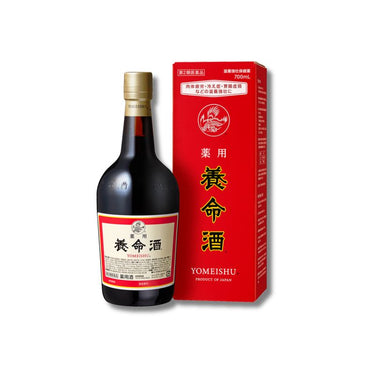


Yakuyou Yomeishu
The power to protect the body. 14 natural herbal ingredients promote blood circulation and lead to a strong body from the inside.

For these people and situations
Product overview
Yakuyou Yomeishu is a "medicinal liquor" extracted with alcohol from 14 carefully selected natural herbal ingredients suited to Japan's climate, classified as a Class 2 OTC Drug (nutritional tonic). The herbal active ingredients promote blood circulation throughout the body, enhance metabolism, and regulate the autonomic nervous system, caring for seven benefits and effects from inside the body: cold sensitivity, physical fatigue, weak stomach and intestines, weak constitution, poor complexion, loss of appetite, and nutritional tonic during and after illness.


Uses extremely soft water with hardness about 18mg/L drawn from 150m underground at the foot of Komagane Highlands, Shinshu, as brewing water. The pure water polished by granite of the Central Alps gently extracts the herbal ingredients. Characterized by a cinnamon-like aroma and gentle sweetness, it is effective when taken continuously, 20mL per dose, three times a day before meals or before bedtime.
Product features
Unique formula combining four actions
14 types of herbal ingredientsHerbs with four functions—"circulate," "supplement," "warm," and "remove"—complement each other, producing seven broad benefits and effects that cannot be achieved individually.
High absorption power through alcohol extraction
Advantages unique to medicinal liquorExtracting herbal ingredients with alcohol makes it easier to act on the stomach and intestines, providing synergistic effects unique to medicinal liquor such as promoting blood circulation, digestion, and appetite.
Brewed with extremely soft water from Komagane, Shinshu
Hardness about 18mg/LUses extremely soft water drawn from 150m underground, polished by granite of the Central Alps, as brewing water. Carefully manufactured in an environment that maximizes the extraction of herbal ingredients.
Seven government-approved benefits different from supplements
Class 2 OTC DrugSupplements cannot claim benefits or effects because they are foods, but Yakuyou Yomeishu is a Class 2 OTC Drug with seven government-approved benefits and effects. Continuous daily use supports improving your constitution.
🩺 Seven benefits and effects, and their mechanisms
We explain the causes of each symptom and how Yakuyou Yomeishu works based on official information.
🥶 Cold sensitivity
For these concerns
- Hands and feet are cold and hard to warm up
- Concerned about coldness not only in winter but also in summer
- Feeling cold from the core of the body
- Prone to chilblains
Mechanism of Effect (3 Steps)
① Herbal ingredients with warming effects (such as cinnamon and clove) dilate blood vessels and promote blood circulation.
② Blood circulation throughout the body improves, allowing warm blood to reach the capillaries at the extremities.
③ Warming the body from the core supports improvement of cold sensitivity.
😴 Physical fatigue
For these concerns
- Fatigue after work or exercise is hard to recover from
- Body feels heavy even the next morning
- Chronic fatigue continues
- Recovery of physical strength has become slower
Mechanism of Effect (3 Steps)
① Combined with the blood circulation-promoting effect of alcohol, 14 herbal ingredients efficiently reach the entire body.
② Oxygen and nutrients circulate throughout the body, promoting the metabolism of fatigue substances.
③ Enhances the body's natural recovery power, leading to a body that tires less easily.
🫁 Weak stomach and intestines (digestive discomfort)
For these concerns
- Usually having poor stomach condition
- Eating small amounts and unable to eat much
- Feeling heavy even without overeating
- Prone to stomach upset or unstable bowel condition
Mechanism of Effect (3 Steps)
① Herbal ingredients beneficial for the stomach and intestines are absorbed, starting to promote digestion and strengthen the stomach.
② Taking it before meals stimulates gastric juice secretion and improves digestion.
③ Gastrointestinal function is normalized, allowing you to enjoy meals deliciously.
🍽️ Loss of Appetite
For these concerns
- Eating less or appetite has decreased
- No interest even in favorite foods
- Eating only light foods in summer
- Feeling full and unable to eat well
Mechanism of Effect (3 Steps)
① 14 herbal ingredients are quickly absorbed in the gastrointestinal tract.
② Continued use gradually improves gastrointestinal issues, naturally increasing appetite.
③ Strengthened gastrointestinal tract increases appetite, allowing you to enjoy meals.
🌱 Weak Constitution
For these concerns
- Lack confidence in physical strength since childhood
- Sometimes feel exhausted and bedridden
- Want to gain weight but can’t
- Suffering from cold sensitivity or summer fatigue
Mechanism of Effect (3 Steps)
① The synergistic action of herbs brings out nourishing and tonic effects, delivering necessary components to an energy-depleted body.
② Gentle effects generally enhance body functions and improve constitution.
③ Gradually gaining strength increases exercise and food intake, transforming into a body less prone to fatigue.
🩸 Poor Complexion (Pale Face)
For these concerns
- Whites of eyes and nails look pale
- Dark circles easily form under the eyes
- Face looks lifeless; appears tired without makeup
- Skincare efforts don’t remove dullness
Mechanism of Effect (3 Steps)
① Herbal ingredients that improve blood circulation circulate within the body, helping blood flow smoothly to the extremities.
② Oxygen and nutrients reach the whole body, boosting metabolism.
③ Improved blood circulation enhances skin cell metabolism, leading to a healthy, rosy complexion.
💪 Nourishment and Strengthening During and After Illness
For these concerns
- Physical strength has declined; recovery from illness is slow
- Get tired after just a little activity
- Want to gain nutrition but have no appetite
- Resistance and immunity are lowered
Mechanism of Effect (3 Steps)
① Combined with the blood circulation-promoting effect of alcohol, the 14 herbal ingredients efficiently reach the entire body.
② The synergistic effects of the herbs produce nourishing and tonic benefits, enhancing the body's healing and recovery abilities.
③ By generally enhancing body functions, various symptoms are gradually improved.
🌿 The Blessings of 14 Herbal Ingredients

14 Types of Herbal Ingredients and 4 Actions
The four actions of "circulating," "supplementing," "warming," and "removing" complement each other, producing a wide range of effects.
🔴 Circulating Action
| Herbal Name | Function |
|---|---|
 Turmeric (Ukon) Turmeric (Ukon) |
Regulates blood flow, promotes metabolism, and adjusts body functions. Also known as turmeric. |
 Motherwort (Yakumosou) Motherwort (Yakumosou) |
Contains effective ingredients like rutin that promote blood circulation. Used as a women's herb since Roman times. |
 Safflower (Kouka) Safflower (Kouka) |
Promotes blood flow and improves coldness. Has an effect of improving complexion. |
 Camphor (Ushou) Camphor (Ushou) |
Regulates autonomic nervous tension and restores overall body balance. |
🟡 Supplementing Action
| Herbal Name | Function |
|---|---|
 Ginseng (Ninjin) Ginseng (Ninjin) |
A synonym for "tonic." Enhances body vitality and aids fatigue recovery. |
 Epimedium (Inyoukaku) Epimedium (Inyoukaku) |
Shows effects on physical weakness with tonic and aphrodisiac actions. |
 Cistanche (Nikujuyou) Cistanche (Nikujuyou) |
Smooths the intestines and regulates bowel movements. Also known as an essential tonic. |
 Rehmannia (Jiou) Rehmannia (Jiou) |
Replenishes blood and builds strength. Used as a tonic for weak constitutions. |
 Peony (Shakuyaku) Peony (Shakuyaku) |
Improves nutritional status. Has a relaxing effect on tension and promotes blood flow. |
 Eucommia (Tochu) Eucommia (Tochu) |
A rare plant with one family, one genus, and one species. The bark has nourishing effects. |
🔵 Warming Action
| Herbal Name | Function |
|---|---|
 Cinnamon Bark (Keihi) Cinnamon Bark (Keihi) |
Has a warming effect that suppresses cold and warms the body. Used as a stomachic for loss of appetite and other conditions. |
 Clove (Chouji) Clove (Chouji) |
In addition to promoting digestion, it also has warming effects. A spice known as clove. |
🟢 Removing Action
| Herbal Name | Function |
|---|---|
 Boufu (Boufu) Boufu (Boufu) |
Roots and rhizomes of boufu. A lucky herbal medicine used in New Year's otoso, wishing for health and longevity. |
 Hanpi (Hampi) Hanpi (Hampi) |
A refined herbal medicine made from mamushi snake. Known since ancient times as a tonic with strengthening effects. |
How Medicinal Yomeishu Works
Promotion of Gastrointestinal Function and Blood Circulation
14 types of herbal ingredients are efficiently absorbed into the body with the power of alcohol, promoting gastrointestinal function and overall blood circulation.
Activation of Nutrient Absorption and Metabolism
It promotes active metabolism by ensuring proper nutrient absorption and circulating herbal components throughout the body.
Body temperature increase and warming
Herbal medicines with "warming effects" such as cinnamon bark and clove care for coldness and support body temperature increase through improved peripheral blood circulation.
Support for healing and recovery power
By enhancing the body's natural healing and recovery power, it supports improvement of seven symptoms including coldness, fatigue, gastrointestinal discomfort, and poor complexion.
Efficacy and Effects
*The following text is the efficacy and effects approved by the government.
Dosage and administration
| Target | Amount per dose | Number of times per day | Timing of intake |
|---|---|---|---|
| Adults (20 years and older) | 20mL | 3 times | Before meals or before bedtime |


・By continuing daily, you may feel effects in about two months as a guideline (individual differences apply).
・This medicine contains about 14vol% alcohol (ethanol).
・Not for use by persons under 20 years old.
❓ Frequently Asked Questions
🌱 Brand Story
Yomeishu was created around 1600, over 400 years ago. Its creation predates the opening of the Edo Shogunate. Since then, while continuously improving for better quality, Yomeishu has valued tradition and innovation, still using the Hiryu logo, said to be Japan's oldest trademark.
The manufacturing plant is located at the foot of the Central Alps, Shinshu Komagane Plateau. Extremely soft water with a hardness of about 18mg/L, drawn from 150m underground, is used as the brewing water that gently extracts the ingredients of the herbal medicines.
Sold nationwide at pharmacies and drugstores as a Class 2 OTC Drug. While conveying Japan's traditional medicinal liquor culture to the present day, it supports the daily health habits of many people.
- This medicine contains about 14vol% alcohol (ethanol). Not for use by persons under 20 years old.
- Please consult a doctor, pharmacist, or registered seller before taking if you are under medical treatment, pregnant or think you may be pregnant, breastfeeding, elderly, or have had allergic reactions to medicines.
- If you experience symptoms suspected to be side effects after taking this medicine, stop taking it immediately and consult a doctor, pharmacist, or registered seller.
- If symptoms do not improve after about one month of use, stop taking it and consult a doctor, pharmacist, or registered seller.
- Do not drink and drive.
- Do not take if you have epilepsy or other convulsive disorders, or a history of convulsions.
- Refrain from consuming other alcoholic beverages while taking this medicine.
- If you have any questions about taking this medicine, please consult a doctor, pharmacist, or registered seller.
- Store away from direct sunlight, high temperature, and humidity.
- Keep out of reach of children.
- Do not transfer to another container (this may cause misuse).
- Please drink as soon as possible after opening.